The Importance of Online Customer Touchpoints
Wondering how to actually improve your online customer touchpoints, rather than just guessing what's working? Think of it this way: every single moment someone interacts with your website is a chance to either draw them in, or quietly lose them. This post shows you exactly where to look.
In this post, we'll cover:
What online customer touchpoints actually are
How to map your customer's journey, without overcomplicating it
The typical touchpoints before and after purchase (and where the stumbles happen)
Practical ways to enhance each stage, from homepage to point of sale
When I work with web design clients, it's crucial to look at the various stages your customer or client goes through when interacting with your website. You want their buying journey to be as smooth and easy as possible. After all, a well-strategised, well-designed website — as a key customer touchpoint — can attract, engage, and retain clients effectively.
What Are Online Customer Touchpoints?
Online customer touchpoints sound fancy, but in simple terms, they're the key moments your dream client or customer interacts with your brand.
This can be external touchpoints, like social media, paid online ads, or events. Or — as we're focusing on in this post — internal touchpoints via your website.
The goal is to remove any stumbles or obstacles that might deter your client or customer from choosing you. From the first point of contact to the final purchase or interaction, the experience should feel like smooth sailing, not an obstacle course.
76% of customers expect companies to understand their needs and expectations (Source: Salesforce). That's a properly high bar — and it's exactly why optimising your touchpoints and providing a seamless website experience matters so much.
Typical Customer Touchpoints Before and After Purchase
A rough shape of the journey usually looks like this:
1. A user has a problem, and researches how to solve it.
2. A few websites come up via search: they click on yours, and start browsing.
3. They browse to get to know your brand, and how you can help solve their problem.
4. Perhaps they sign up for your newsletter, click on a blog post, read product reviews or FAQs, land on a service page, or use your contact form.
If they decide to move forward, the point of sale (or enquiry) is the final touchpoint, and can genuinely make or break the outcome. Check the process regularly to make sure it's functioning well — a clunky final step can undo all the good work that came before it.
After that, the client or customer is now onboard. A thank-you email at the start of the relationship is a lovely, low-lift opportunity to build trust and rapport right from the outset.
Question 🤔: where might any stumbles occur on your own website? Worth genuinely sitting with that for a moment before reading on.
Larger businesses plot out customer journey maps. They can look pretty complicated like Hubspot’s below. This can be a time-intensive process and for solopreneurs isn’t always possible (or needed) due to time or tech limitations.
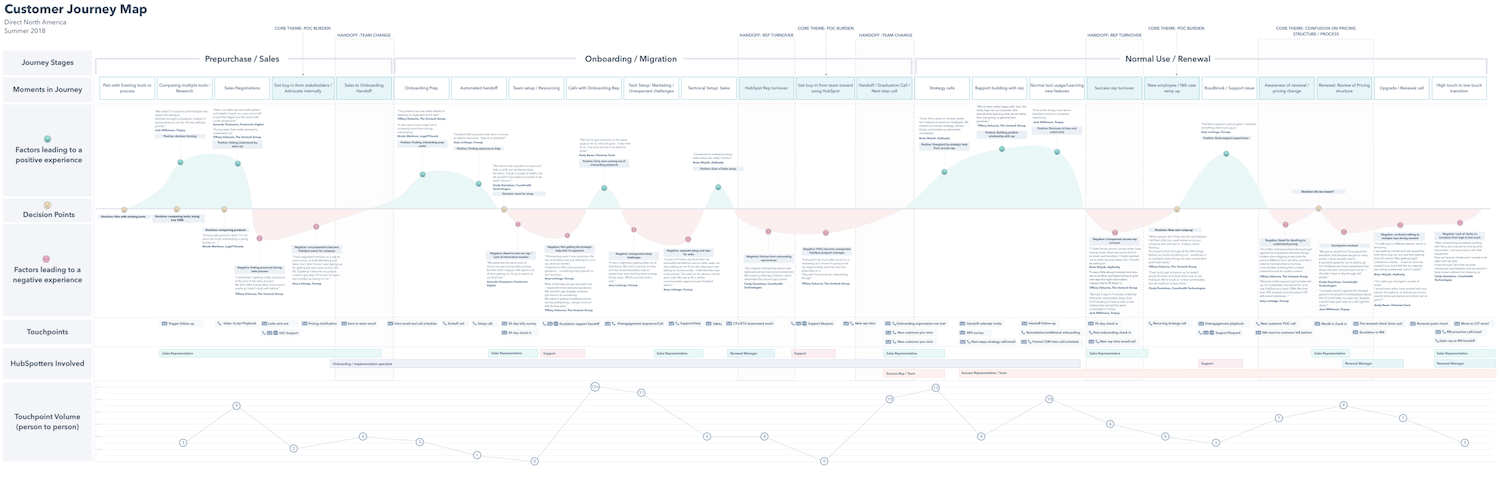
But don't worry, creating a simple visual customer journey map using Canva, Whimsical, or even plotting it out onto a piece of paper, can be very effective.
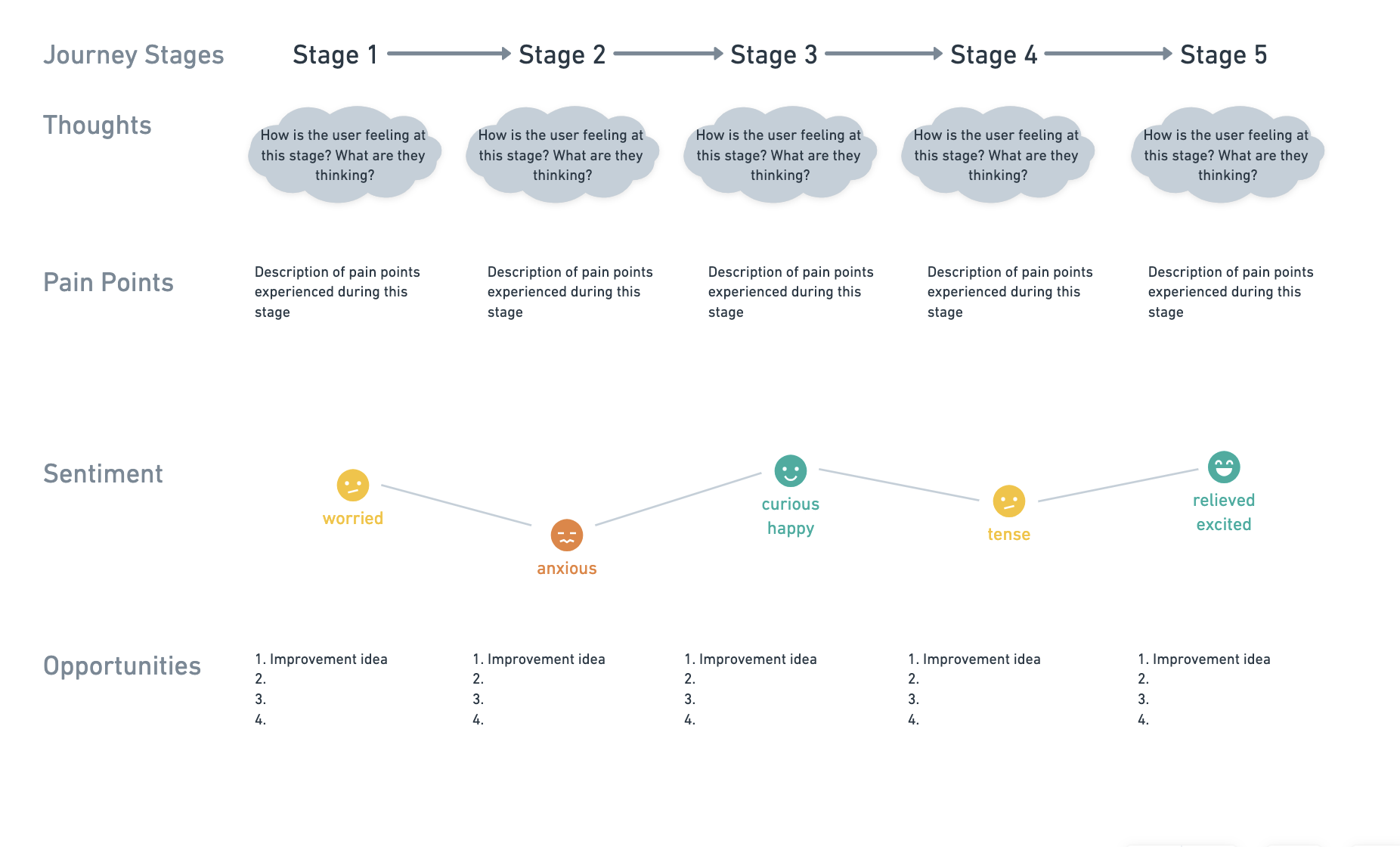
Enhancing Your Touchpoints
Look out for ways to overcome any stumbling blocks along the way:
After purchase or enquiry, there's a risk of the client not acting — perhaps because there isn't enough information, or they're not sure what to do next.
Consider the opportunity for upselling or cross-selling a related product or service, gently, at the right moment.
Feedback and surveys can help pinpoint exactly where things fell short or failed to deliver.
Create compelling call-to-action buttons, like "See if We’re a Good Fit," to guide visitors towards your actual conversion goal.
It's worth knowing that cart abandonment (and its equivalent for service businesses — enquiry drop-off) is a genuinely widespread issue, not a sign you're doing something uniquely wrong: the average online cart abandonment rate sits around 70% (Source: Baymard Institute, 2026). The goal isn't perfection — it's steadily reducing friction, one touchpoint at a time.
Key Elements for an Effective Homepage Touchpoint
Your homepage is the first impression of your website, so it plays a huge role in whether someone stays to browse, or clicks away.
Demonstrate how your offering can help your audience, and show them clearly what to do next.
Make sure your site is clear, visually appealing, has working links, is SEO optimised, and speaks to the heart and minds of the potential client/customer.

Five Practical Ways to Improve Customer Touchpoints
If you take nothing else from this post, take these five:
1. Understand your audience — properly, not just on paper.
2. Optimise your website layout and design for clarity, not cleverness.
3. Simplify the buying (or enquiry) process, removing any unnecessary steps.
4. Enhance your customer service — quick, human responses build trust fast.
5. Use feedback for continuous, gentle improvement, rather than a one-off fix.
FAQ’s
-
Not necessarily. A simple, hand-drawn or Canva-made version is often just as useful as a complex HubSpot-style diagram — the value is in the thinking, not the polish of the tool.
-
Internal touchpoints happen on your own website: your homepage, contact form, blog. External touchpoints happen elsewhere, like social media, paid ads, or in-person events. This post focuses on the internal, website-based ones, since that's where you have the most control.
-
At least once or twice a year, or whenever you notice a change in enquiry or conversion numbers. It's also worth reviewing after any major site update, since even small design changes can shift how visitors move through your journey.
-
Your homepage and your contact form (or point of sale) tend to have the most outsized impact: the homepage sets first impressions, and the final step decides whether all that earlier effort actually converts.
-
Yes, absolutely. Small, targeted fixes — a clearer CTA button, a shorter contact form, a friendlier thank-you email, often make a difference more than a full rebuild, and cost far less time and money.
Takeaway: The Impact of Enhanced Touchpoints on Business Growth
Optimising your online customer touchpoints improves the customer journey, boosts satisfaction, and ultimately, contributes to genuine business growth. It's rarely about one big fix — it's about steadily removing the small stumbles, one at a time.
If you're feeling stuck on where your own website's touchpoints might be losing people, that's exactly what my Web Audit Service is built for. I'll take a proper look across your whole customer journey — homepage, navigation, forms, and everything in between — and give you clear, prioritised recommendations. Available for Squarespace and other platforms. Pop your details through my contact form and let's have a chat.
Thanks for being here, and if you’d like more tips, tools, and tricks [without the overwhelm], to help YOU grow your small business, I’d love to have you join my twice-monthly HeartBiz Letter.
Subscribe here to receive free downloads: eg. Ideal Customer editable Canva Template, and an SEO Checklist for Squarespace (or other platforms).