Squarespace vs WordPress - Which Is Best For Your Business?
Torn Between the Design Freedom of WordPress and the User-Friendly Interface of Squarespace?
Are you struggling to choose the perfect platform for your new website?
By the end of this post, you'll be able to answer the all-important question for yourself, Squarespace vs WordPress.
Don't worry, you're not alone. Below, I delve into the pros and cons of both platforms, providing you with the knowledge you need to make the best decision for your small business.
In this post, we'll cover:
Where each platform genuinely wins, ease of use, design, cost, support, SEO, and e-commerce
The lesser-known considerations, like security
How to decide which is right for your specific business
The Website Platform Debate - Squarespace vs WordPress
Not to pull the wool over your eyes, but I’m a Squarespace Website Designer, so you can guess where my loyalties lie with the ole Squarespace vs WordPress debate ;).
I’ve used WordPress and spoiler alert, but it didn’t end well! Still, I want to give you a fair understanding of each platform over some key areas so you can make an informed decision based on your goals and needs.
And… this might surprise you - WordPress might be the best option for you, but most of the time, I’d choose Squarespace, even if I wasn’t a web designer.
For context: WordPress still powers around 41% of all websites globally, making it the most widely used CMS by some distance (W3Techs). Scale isn't the same as "right for you," though, which is exactly what the sections below are for.
Ease of Use and Design
This is usually where the decision starts, and where it often ends too.
Squarespace is known for its intuitive, user-friendly drag-and-drop interface, called Squarespace Fluid Engine (I love it). It requires minimal technical knowledge and no coding experience to create a beautiful website for both desktop and mobile.
While powerful, WordPress has a steep learning curve (I can attest to this), especially for beginners. This is acknowledged in its extensive documentation. It helps to know code, or to hire someone who is.

All-In-One Platform
How many separate providers do you actually want to manage?
Squarespace offers website hosting, domain registration, SSL certificates, and various integrated marketing features like email marketing, scheduling, membership and course sites, and SEO tools, all within the platform. This simplifies management and billing for small business owners who don't want to deal with multiple providers.
With WordPress, you'll typically need separate providers for hosting, domain registration, and some marketing tools.
Design Flexibility
More flexibility sounds appealing, until you factor in the time it takes.
Squarespace offers beautiful, pro-vetted, pre-designed templates to get your creative juices flowing. They cater to many industries, including creatives, coaching and wellness services. A growing library of pre-designed blocks and layouts offers a good balance between ease of use and design flexibility.
WordPress can offer more design freedom through themes and plugins. Remember to be mindful of their quality, as many are poor. Finding and customising a theme will take time, and to reap the full benefits, you’ll need some coding experience or hire someone to help you. This can be costly for small business owners and overwhelming for non-technical users.
Scalability and Growth
Your website should be able to grow alongside your business, not hold it back.
Squarespace websites can grow with membership and course areas, a private blog for any gated content, email marketing tools, and e-commerce functionality to support future growth.
You might find this helpful: 7 simple steps for creating a winning website plan.
WordPress offers extensive plugins for functionality, but they can pose problems due to their complexity and ongoing maintenance. Plugins, for me, were a thing of nightmares.
Cost Comparison
"Free" rarely means free once you add it all up.
Squarespace has an all-in-one pricing structure, including hosting, a domain name, and security features. There are currently four website plans (Basic, Core, Plus, and Advanced), that can be paid monthly or annually.
Note: If we work together, I can offer you a Squarespace hosting discount.
WordPress.org is free, BUT you’ll need to factor in hosting costs, domain registration, themes, and plugins, which add up. You can find cheaper options, or the sky’s the limit! If you’re not techy or want a large or complex website, you’ll need to hire a developer, which could end up costing thousands of pounds or dollars.
Customer Support
When something breaks at 9pm on a Sunday, who's actually there to help?
Squarespace customer support is excellent. They offer 24/7 live chat, email support and an extensive knowledge library jam-packed with useful hold-handling walk-throughs and mini-videos.
WordPress relies heavily on online forums and communities for troubleshooting, which can be less convenient for immediate assistance, as explained in its support section. This was a real problem for me. There were occasions when I asked for help and never received a response!
SEO Optimisation
Both platforms can rank well, but the effort involved looks quite different.
Squarespace offers built-in SEO tools and is mobile-friendly, both crucial for online presence.
Squarespace and WordPress offer basic SEO tools such as customisable meta titles and descriptions, control of social images, customisable URLs, the ability to hide a page, image alt text, page redirects, and automatic sitemaps.
Personally, I recommend using SEOSpace for clients’ sites and my own. I’ve found it to be simple to use, highly effective, and the support team are great. (Affiliate disclosure: SEOSpace is a tool I genuinely use and recommend, small compensation is possible on click-through, at no extra cost to you.)
WordPress can provide advanced optimisation through plugins, but this requires more management. The Yoast plugin is popular and one I used back in the day. You can find comparisons of their SEO capabilities on resources like Website Builder Expert.
Personal insight on plugins: sometimes, when there was a system update, I found some plugins would crash and disrupt the site's design or functionality, with no help in sight!

Get my FREE Squarespace SEO Checklist (helpful for all platforms) and learn reliable ways to boost your search rankings.
E-commerce Functionality
If you're planning to sell anything, this section matters more than most.
Squarespace offers built-in e-commerce features, allowing you to sell products directly through your website with ease. You’ll need to upgrade to an e-commerce plan to unlock advanced goodies like gift cards, video storage, subscription selling, advanced web analytics, unlimited inventory, product listings on Instagram, integration with an Etsy shop, and abandoned cart recovery.
WordPress offers premium e-commerce plugins like WooCommerce. Setting them up can require additional configuration and technical knowledge, and WooCommerce is reliant on plugins for many of its sales features. Costs can add up.

Mobile-Responsiveness
More than half your visitors are probably on their phone right now.
All Squarespace templates are mobile-responsive by default, ensuring your website looks great and functions flawlessly on all devices, using Fluid Engine to fine-tune things to your heart’s content.
WordPress offers responsive themes, but choosing and customising them can be more involved, as explained in this WPBeginner guide.
Lesser-Known Considerations - Website Security
This is the one people rarely think about until something goes wrong.
Squarespace is renowned for its robust security measures. It provides built-in SSL certificates for ALL its websites, essential for protecting your site's data and visitors' information, and it handles security updates automatically, ensuring your site is always protected against any potential threats.
Squarespace's platform is NOT open-source, which means potential hackers can’t exploit the source code to find vulnerabilities. This level of security makes Squarespace a trusted choice for small businesses.
WordPress as a platform isn't inherently insecure, but its popularity makes it a common target for attackers. The open-source nature of WordPress allows anyone to study the source code, including hackers looking for vulnerabilities.
Most security issues arise from out-of-date core software, themes, plugins, and weak passwords. Regular updates and strong security measures, reliable security plugins, secure hosting, SSL certificates, strong passwords, and a good backup strategy, are crucial to maintaining a secure WordPress site.
Additional Squarespace Features
Squarespace simply comes with more built-in features than WordPress does.
A few worth knowing about:
Analytics
(If you need help with this, book a 90-minute Squarespace Help or Strategy session)
Social accounts
Courses or Member Areas
Social feeds
Podcasts
AI tools
CRM
Blog paywall for gated content

Gated blog content screenshot example
Squarespace Extensions
There are currently 47 (and growing) Squarespace extensions.
These include AfterShip, Zapier, TaxJar, TinyIMG, Weglot Translate, QuickBooks, Printful, Printify, LiveChat, MailChimp, Easyship, and FreshBooks.
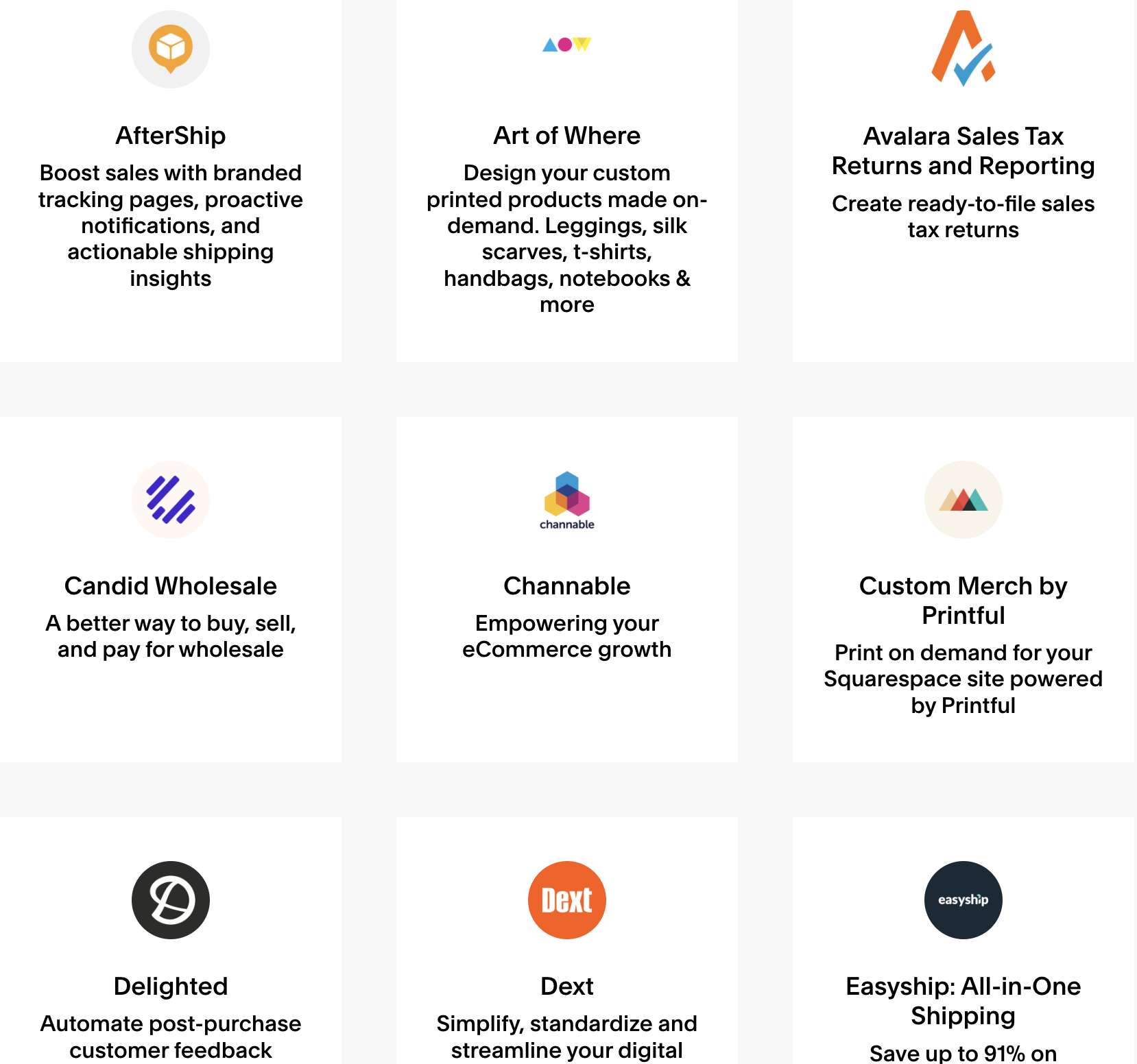
Squarespace Integrations
Extensions are one thing, but integrations make daily life genuinely easier.
Squarespace has some seamless integrations that make life better with platforms such as Zapier, Google Workspace, and various social media platforms.
Thinking of Switching from WordPress to Squarespace
This is probably the question that brought you to this post in the first place.
Here’s a blog post talking you through how to switch from WordPress to Squarespace and retain your Google ranking.
FAQ’s
-
For most non-technical small business owners who want an all-in-one solution with strong built-in support, Squarespace tends to be the better fit. WordPress can be the right choice if you need very specific custom functionality and have the technical resource to manage it.
-
Squarespace's pricing is all-inclusive (hosting, domain, security). WordPress.org itself is free, but hosting, themes, plugins, and any developer help add up, and can end up costing more than Squarespace over time, especially for non-technical owners.
-
Yes, with the right approach to redirects and URL structure. This post walks through exactly how.
Squarespace vs WordPress: Wrapping Up
Ultimately, the best platform depends on your specific needs, technical skills, and budget.
However, for busy, non-technical small business owners who prioritise ease of use, beautiful design, and an all-in-one solution, Squarespace wins hands down. Its superior editor, great support, and built-in features make it a no-brainer for me. 🌿
Not sure which platform genuinely fits your business? That's exactly what a Web Strategy Session is for, 90 minutes to talk through your specific goals, budget, and technical comfort, so you choose with confidence rather than guesswork. If you've already landed on Squarespace, take a look at a Custom Squarespace Website build or a three-day build. 🤎
Thanks for being here, and if you’d like more tips, tools, and tricks [without the overwhelm], to help YOU grow your small business, I’d love to have you join my twice-monthly HeartBiz Letter.
Subscribe here to receive Free downloads: Ideal Customer editable Canva Template, and an SEO Checklist for Squarespace (or other platforms).